
Is It Time to Replace Your Spark Plugs? 5 Signs to Watch For

Spark plugs might be small, but they play a massive role in how an engine runs. When they start wearing out, a car will feel off — even if it's hard to put a finger on exactly why. Left alone too long, bad plugs can lead to poor gas mileage, engine damage, and hard starts that leave a driver stranded.
This post breaks down the real signs it's time to replace spark plugs, what happens when the job gets put off too long, and how Swift's Automotive handles spark plug jobs as a mobile mechanic service across Southeast Texas.
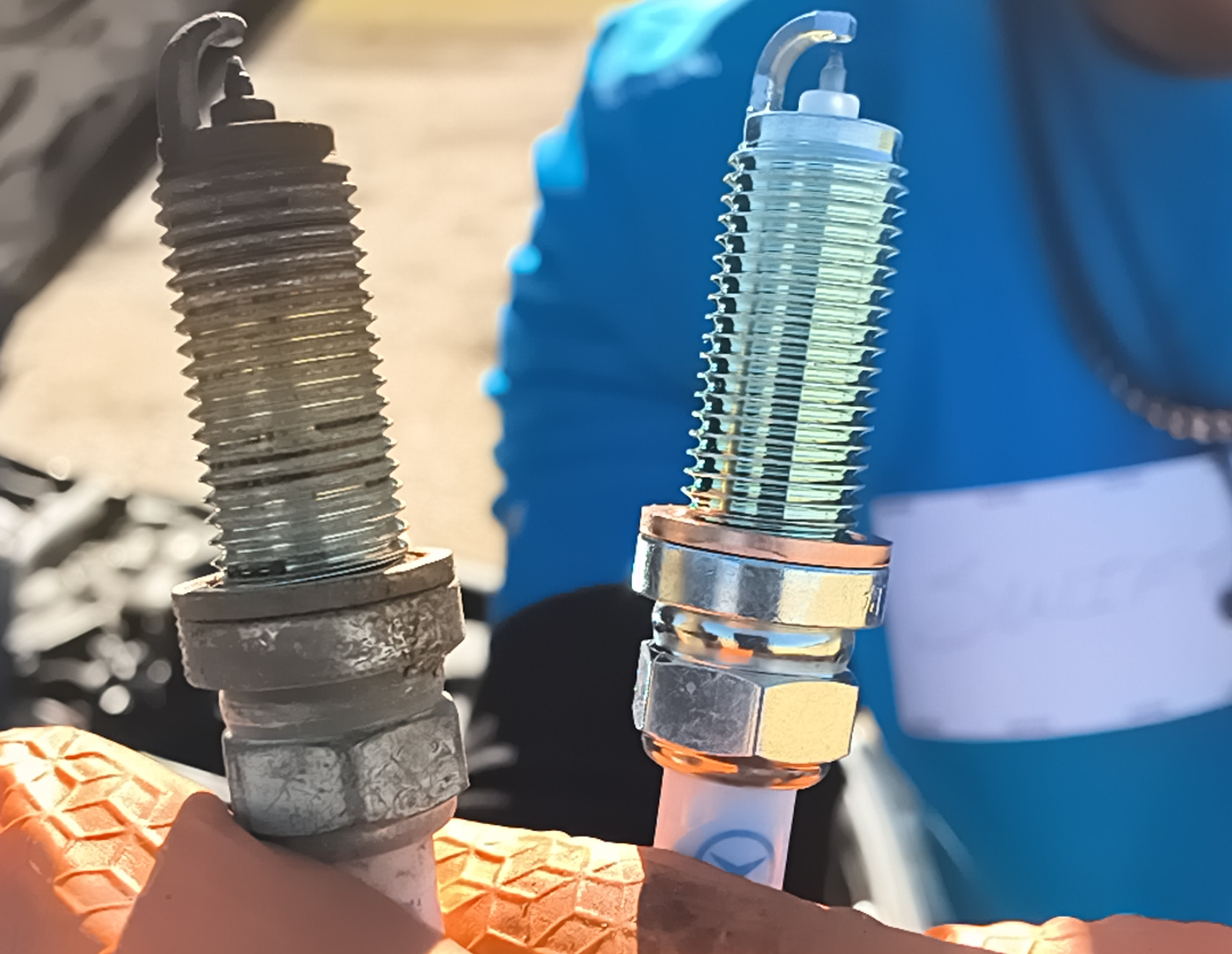
What Spark Plugs Actually Do (And Why They Matter)
Each spark plug delivers the spark that ignites the air-fuel mixture in an engine's cylinders. That small explosion is what pushes the piston down and makes the car move. If that spark is weak, delayed, or missing, the engine feels it — and performance drops.
Bad spark equals bad burn, which means rough running, wasted fuel, and long-term engine stress.
Most vehicles have four to eight spark plugs, and depending on the engine layout, some are easy to reach while others are buried deep under manifolds. Either way, they all need to be clean and firing strong to keep a vehicle running smoothly.
Rough Idle or Misfiring
One of the earliest symptoms of worn spark plugs is a rough idle or a sudden jolt while accelerating — often caused by a plug failing to fire consistently.
Watch for:
The steering wheel shaking while stopped
A subtle engine stumble when pressing the gas
The car feeling like it's "missing" a beat
Worth knowing: Don't wait until the whole engine misfires. Even one weak plug can throw things off and lead to bigger issues with ignition coils or the catalytic converter.
Gas Mileage Takes a Hit
Filling up more often while driving the same routes and habits is a classic sign spark plugs are the silent culprit. Worn or fouled plugs cause incomplete combustion, meaning not all the fuel gets used efficiently — so the engine compensates by burning more gas without delivering any better performance for it.
It's not always obvious at first. There's usually no loud noise or flashing dashboard light — just a fuel tank that starts running empty sooner than it used to.
Swift's Automotive has seen Southeast Texas drivers blame bad fuel or a dirty air filter for poor gas mileage, only to find spark plugs that hadn't been changed in 60,000+ miles. Replacing them typically brings back 3–5 miles per gallon, along with better throttle response.
For perspective: a car that normally gets 24 mpg dropping to 19–20 mpg burns an extra gallon of gas every 80–100 miles. Over a month of normal driving, that can easily add up to an extra $30–$50 at the pump — all because a few worn plugs aren't doing their job.
It's Harder to Start the Vehicle
A slow crank or multiple tries to turn the engine over — especially in the mornings — doesn't always point to the battery or starter. Bad spark plugs can cause weak ignition during startup, especially when the engine is cold.
Listen for:
A sluggish, delayed crank
The engine turning over but not catching
Starting fine one day, not the next
In humid Southeast Texas, moisture and corrosion can worsen this effect on older plugs, especially on vehicles that sit for days between starts.
Check Engine Light With No Clear Cause
A failing spark plug can trigger the check engine light even when the car seems to drive normally. It's often caused by a misfire code — like P0301 (misfire on cylinder 1), P0302, and similar codes.
Even one misfire code can lead to:
Poor acceleration
Increased emissions
Long-term damage to the catalytic converter if ignored
Swift's Automotive carries diagnostic scanners on every mobile call, so a check engine light with no obvious cause can usually be identified in minutes — and fixed on the spot if it's plug-related.
It's Just Time to Replace Spark Plugs — Based on Mileage
Even when everything feels fine, spark plugs are still a scheduled maintenance item. Like oil or filters, they wear out over time, and skipping a replacement interval can cost more down the line.
A basic guide:
Standard copper plugs: replace every 30,000–40,000 miles
Platinum or iridium plugs: can last 60,000–100,000 miles, but worth checking around 60k
Turbocharged engines or vehicles with a history of ignition issues: replace sooner
A vehicle with over 40,000 miles and no record of a plug change is worth having inspected now.
What Happens If It Gets Put Off Too Long?
Delaying spark plug replacement can lead to more than just bad gas mileage.
Swift's Automotive has seen it lead to:
Ignition coil failure (especially in coil-on-plug setups)
Catalytic converter damage from unburned fuel
Increased carbon buildup in the engine
Stalling, hesitation, or complete no-start situations
Stripped threads if plugs seize up from being left in too long
What could've been a $300–$400 job becomes a $800+ ignition system repair when it's put off too long.
How Swift's Automotive Handles Spark Plug Jobs On-Site
The repair shop comes to the customer — driveway, worksite, or roadside. A typical spark plug job looks like this:
Inspect the current plugs and ignition components
Run diagnostics if the check engine light is on or performance issues have been reported
Determine plug type and whether replacement is needed (fouled or worn plugs are shown to the customer, not just described)
Replace plugs with quality parts matched to the vehicle
Clear codes and test-run the engine to confirm everything's running smoothly
Sedans, trucks, SUVs — Swift's Automotive has handled plug jobs on just about every setup out there.
Frequently Asked Questions
Can bad spark plugs really hurt my gas mileage? Yes. Worn plugs cause incomplete combustion, so the engine burns more fuel to make up for lost power. A vehicle that drops from 24 mpg to 19–20 mpg because of old plugs can burn through an extra $30–$50 in gas a month.
How much does spark plug replacement cost if I wait too long? A straightforward plug job typically runs $300–$400. Waiting too long can lead to ignition coil failure or catalytic converter damage, turning that same job into a $800+ repair.
How often do spark plugs actually need to be replaced? Standard copper plugs typically need replacing every 30,000–40,000 miles, while platinum or iridium plugs can last 60,000–100,000 miles. Turbocharged engines or vehicles with a history of ignition issues should be replaced sooner.
Final Word from the Wrench
Bad spark plugs are a silent killer. The symptoms might not be obvious at first — a little hesitation here, a small bump in fuel use there. But over time, they drag down performance, damage other components, and leave a driver wondering why the car just won't run right anymore.
The good news: it's an easy fix, if it's caught early.
A car running rough, burning more gas, or just due for maintenance is worth a call to Swift's Automotive. The team comes to the customer, diagnoses it on-site, and gets it done right.
Proudly serving Southeast Texas—including: Beaumont, Lumberton, Silsbee, Vidor, Port Arthur, Groves, Nederland, Kountze, China, Winnie, and others.
Catch you at the next pit stop!
– Swift's Automotive, LLC
📞 Call or Text 409-206-0581
Published: 7th May 2025


